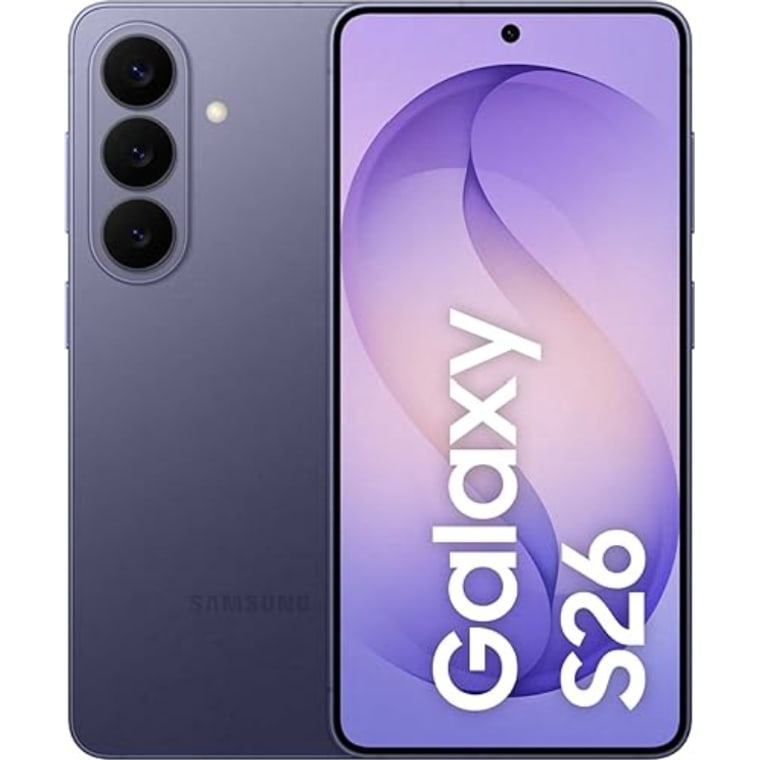
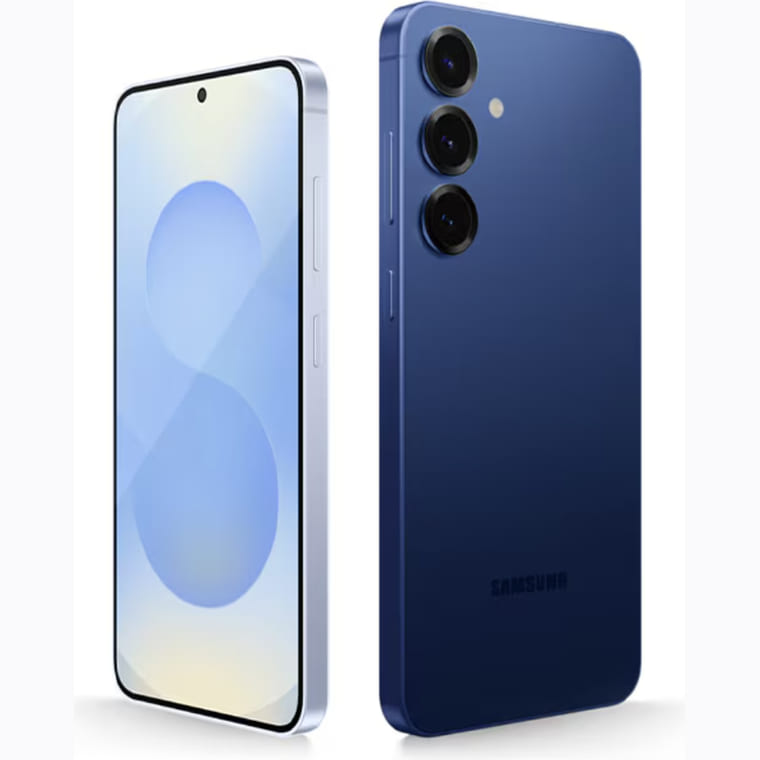
Samsung announced the Galaxy S26 on 25 February 2026 and released it on 6 March. It sells for ₹79,999. The Galaxy S25 it replaces now goes for around ₹68,999. That ₹11,000 gap is the whole question.
When we first published this comparison, Samsung India had not disclosed the S26's processor, charging speed, IP rating or peak brightness, and we said so rather than guessing. Those figures are now available. Every single one came back matching the S25 — which changes the argument, but not in the newer phone's favour.
The cameras are the same. All four of them.
This is the finding that reframes everything else. Put the two specification sheets side by side and the camera systems are identical:
- 50 MP f/1.8 main with OIS — same
- 10 MP f/2.4 telephoto at 3× optical — same
- 12 MP f/2.2 ultra-wide at 120° — same
- 12 MP f/2.2 front camera — same
- 8K video, 30× digital zoom — same
The S26 adds an optical-quality 2× mode, which is genuinely useful because 2× is where most portraits get framed. But it is a software crop of the same sensor, not new glass. If you are upgrading for the camera, there is nothing here.
Screen, charging and brightness: identical too
Both panels run 2340 × 1080 at adaptive 1–120Hz LTPO, both peak at 2600 nits. The S26's is 6.3 inches against 6.2 — a tenth of an inch, spread across the same pixel count, so the newer phone is fractionally less dense.
Charging is 25W wired and 15W Qi2 on both. This is worth dwelling on, because when the figure was unpublished we wrote that if the S26 charged meaningfully faster the calculation would shift. It does not. 25W was slow for a flagship in 2025 and Samsung has not moved it. Half an hour gets you 55%.
The processor: a Snapdragon-to-Exynos swap, and it depends where you live
Samsung India's own specification page lists an unnamed "deca-core 3.8 / 3.26 / 2.76 GHz" and never says what the chip is. The reason that layout is anonymous is worth knowing: the Galaxy S26 is two different phones depending on region.
- US, Canada, China: Qualcomm Snapdragon 8 Elite Gen 5, octa-core, Adreno 840 graphics
- India and the rest of the world: Exynos 2600, 10-core, Xclipse 960 graphics
India gets the Exynos. The Galaxy S25 in India, by contrast, is a Snapdragon 8 Elite for Galaxy with Adreno 830.
So if you buy the S26 in India you are not simply getting a newer version of the same silicon — you are switching architecture and graphics vendor. Whether that is an upgrade is a genuine question and not one a specification table answers. Exynos and Snapdragon parts have historically differed most under sustained load and in thermal behaviour rather than in peak numbers, and we have not run either phone. We are flagging the swap because it is a real decision point, not because we have measured a winner.
Storage goes backwards at the base price
The Galaxy S25 starts at 256 GB. The Galaxy S26 starts at 128 GB. You are paying ₹11,000 more for a phone whose entry configuration holds half as much, and with no card slot on either, storage is a purchase-time decision you cannot revisit.
If you compare like for like at 256 GB, the S26's premium is larger than the headline ₹11,000 suggests.
Where the S26 genuinely wins
Battery. 4300 mAh typical against 4000, and up to 30 hours of video playback against roughly 26. That is a real, daily, noticeable difference — the single strongest reason to choose the newer phone. Worth knowing that 4300 mAh is the typical figure; rated capacity is 4175 mAh, and both are legitimate measurements under different standards.
Software runway. Android 16 and One UI 8.5 out of the box, seven major OS updates, and security patches guaranteed to February 2033. The S25 gets the same seven-year policy but started counting a year earlier. If you keep phones until they stop working, this is worth more than everything else on this page combined.
Build. Gorilla Glass Victus 2 front and back on an Armor Aluminum 2 frame, IP68 rated to 1.5 m for 30 minutes.
The verdict, and what would change it
The S25 is the better purchase at ₹68,999. Same cameras, same screen resolution, same brightness, same charging, more base storage, Snapdragon silicon, and ₹11,000 back.
The S26 earns its price only if the battery or the extra year of updates is decisive for you. Those are legitimate reasons and we are not dismissing them — a phone that lasts noticeably longer between charges is a phone you enjoy more. But they are two advantages against a list of ties and one regression.
What would change our answer: independent testing showing the Exynos 2600 clearly outperforms the Snapdragon 8 Elite for Galaxy under sustained load, or the S26 price falling closer to the S25's. We will revisit this page if either happens.