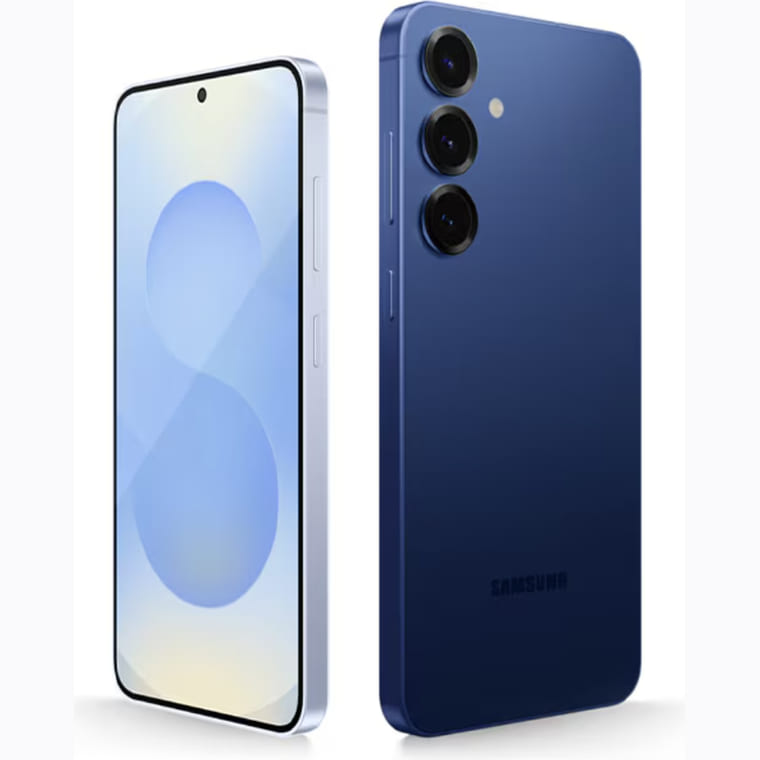
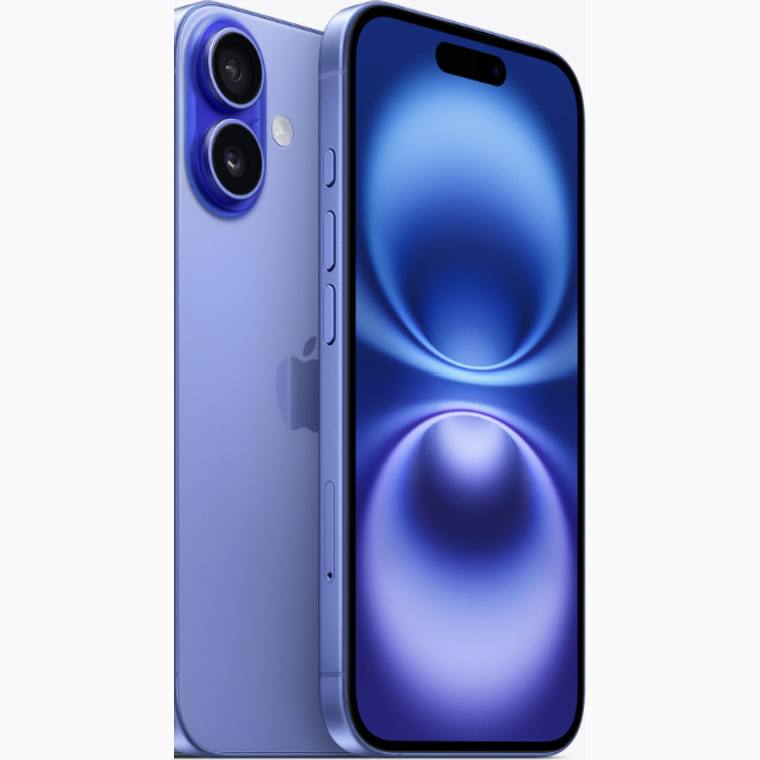
The Samsung Galaxy S25 and Apple iPhone 16 cost virtually the same in India — around ₹79,999 — yet they represent two completely different philosophies of what a smartphone should be in 2025. The Galaxy S25 leads on hardware versatility and AI feature breadth; the iPhone 16 leads on privacy, ecosystem integration, and video quality. Here is a section-by-section breakdown of every major area.
Display: Galaxy S25 wins on every metric
The Galaxy S25 uses Samsung's Dynamic AMOLED 2X panel with adaptive refresh from 1Hz to 120Hz. This means the screen runs at 1Hz when showing a static wallpaper (saving battery) and ramps to 120Hz the moment you start scrolling — making everything feel noticeably smoother. The iPhone 16, at ₹79,999, still ships with a 60Hz panel. Apple reserves ProMotion 120Hz for the Pro models. The S25 also hits 2,600 nits peak outdoor brightness versus Apple's 2,000 nits, and adds an always-on display that shows time and notifications without fully waking the screen. On display specs, S25 is the clear winner at this price.
AI Features: Galaxy AI vs Apple Intelligence
This is the most interesting battleground of 2025. Both phones ship with dedicated AI platforms, but they take different approaches.
Galaxy AI on the S25 is built around Gemini Nano running on-device, with cloud fallback to Google's servers for heavier tasks. Key features include: Circle to Search — draw a circle around anything on screen to search it instantly; Live Translate — real-time translation during phone calls so both parties hear their own language; Generative Edit — AI that can fill in backgrounds when you move or remove objects from photos; Chat Assist — rewrites messages in a different tone; and Note Assist — summarises meeting notes automatically. Galaxy AI works across more tasks but some features require cloud processing, which has privacy implications.
Apple Intelligence on iPhone 16 is Apple's answer — designed from day one to run on-device, with a Private Cloud Compute system that processes data in Apple's servers without Apple employees being able to see it. Key features include: Writing Tools — rewrite, proofread, and summarise any text anywhere in iOS; Clean Up — remove distracting objects from photos; ChatGPT in Siri — ask Siri anything and it passes complex queries to ChatGPT with your permission; Priority Notifications — AI reads and summarises notifications by importance; and Photo Memories — generates AI slideshows based on events. Apple Intelligence is narrower in scope but significantly stronger on privacy.
For India specifically: Galaxy AI's Live Translate and Circle to Search work better for Indian language support. Apple Intelligence was still rolling out Hindi support as of early 2025.
Camera & Zoom: S25 has a hardware advantage iPhone cannot match
The single biggest practical difference between these two phones is the camera system. The Galaxy S25 has three lenses: a 50MP main, a 12MP ultra-wide, and a dedicated 10MP telephoto with 3× optical zoom. The iPhone 16 has only two: a 48MP main and a 12MP ultra-wide. There is no telephoto on the standard iPhone 16.
What this means in practice: zoom in 3× on the S25 and you get a sharp, optically zoomed image with no quality loss. Zoom in 3× on the iPhone 16 and you get a cropped and enlarged version of the main sensor — softer, with more noise in low light. Push further to 10× or 30× and the gap widens significantly. The S25 uses AI-enhanced zoom (called AI Zoom) to reconstruct detail at high magnification; the iPhone 16 relies entirely on digital crop.
For sports, wildlife, concerts, or anything where you need to reach across a room or across a field, the Galaxy S25 is meaningfully better. For everyday shooting at normal distances, both phones produce excellent results.
Where iPhone 16 pulls ahead is video. Apple's Action Mode video stabilisation is the best in any smartphone — it eliminates shake even when running, walking on rough terrain, or shooting from a moving vehicle. The S25 has good stabilisation but falls short of Action Mode in edge cases. iPhone 16 also shoots smoother, more cinematic-looking footage out of the box with less processing artefacts at the edges of the frame.
Both phones use AI heavily in the camera. The S25's Generative Edit can replace entire backgrounds with AI-generated scenery — the iPhone 16's Clean Up can remove people or objects but cannot generate new background content at the same level.
Performance: Effectively tied in real use
Snapdragon 8 Elite in the S25 and Apple A18 in the iPhone 16 are both world-class processors in 2025. The A18 leads in single-core performance and machine learning inference benchmarks. The Snapdragon 8 Elite leads in sustained multi-core performance and GPU tasks under load. In real daily use — apps, browsing, social media, video calls, gaming — you will not perceive a difference. The S25's 12GB of RAM does give it an edge in keeping more apps open simultaneously.
Battery: S25 lasts longer, iPhone charges faster wirelessly
The S25 has a physically larger 4,000 mAh battery and consistently outlasts the iPhone 16 by 3–4 hours of screen-on time in real-world use. For heavy users, this matters. On charging: wired speeds are similar (25W vs 20W, both slow by 2025 Android standards). The iPhone 16 pulls ahead on wireless with MagSafe at 25W versus Samsung's 15W Qi2. The S25 adds reverse wireless charging — you can wirelessly charge your Galaxy Buds by placing them on the back of the phone.
Software & Updates: Samsung edges ahead
Samsung now guarantees 7 years of Android OS updates for the S25 — setting a new Android record. Apple does not publish guaranteed update timelines, but historically supports iPhones for 5–6 years. If you plan to keep your phone for 4–5 years, both are fine. Beyond 5 years, Samsung's guarantee provides more certainty. One caveat: One UI 7 ships with Samsung and third-party bloatware, and Samsung's own apps display occasional ads. iOS 18 is a cleaner, more consistent experience with no ads in system apps.
Who should buy which?
Buy the Galaxy S25 if you use Android, want a telephoto zoom lens, care about AI features like Live Translate and Circle to Search, game on your phone, or need maximum battery life. Buy the iPhone 16 if you already own Apple devices (Mac, iPad, AirPods), shoot a lot of video, work with sensitive data and care about AI privacy, or simply prefer iOS's simplicity and resale value.
Frequently Asked Questions
Does iPhone 16 have zoom?
The standard iPhone 16 does not have a telephoto (optical zoom) lens. It supports up to 2× optical-quality zoom using the main 48MP sensor's centre crop, and up to 15× digital zoom. For true optical zoom you need the iPhone 16 Pro (3×) or iPhone 16 Pro Max (5×).
Does Galaxy S25 have AI features?
Yes. Galaxy AI on the S25 includes Circle to Search, Live Translate for phone calls, Generative Edit for photos, Chat Assist, Note Assist, and Transcript Assist. These run on Gemini Nano on-device, with some features using Google cloud for heavier processing.
Which is better for photography — S25 or iPhone 16?
For zoom and versatility, the Galaxy S25 is better due to its dedicated 3× telephoto lens and 30× AI zoom. For video quality and stabilisation, the iPhone 16 is better. For everyday stills in good light, both are excellent and results are largely a matter of personal preference for colour science (Samsung: vivid; iPhone: natural).
Is Galaxy S25 available in India?
Yes. The Samsung Galaxy S25 launched in India in January 2025 starting at ₹79,999 for 256GB. It is available on Flipkart, Amazon India, and Samsung's own website.