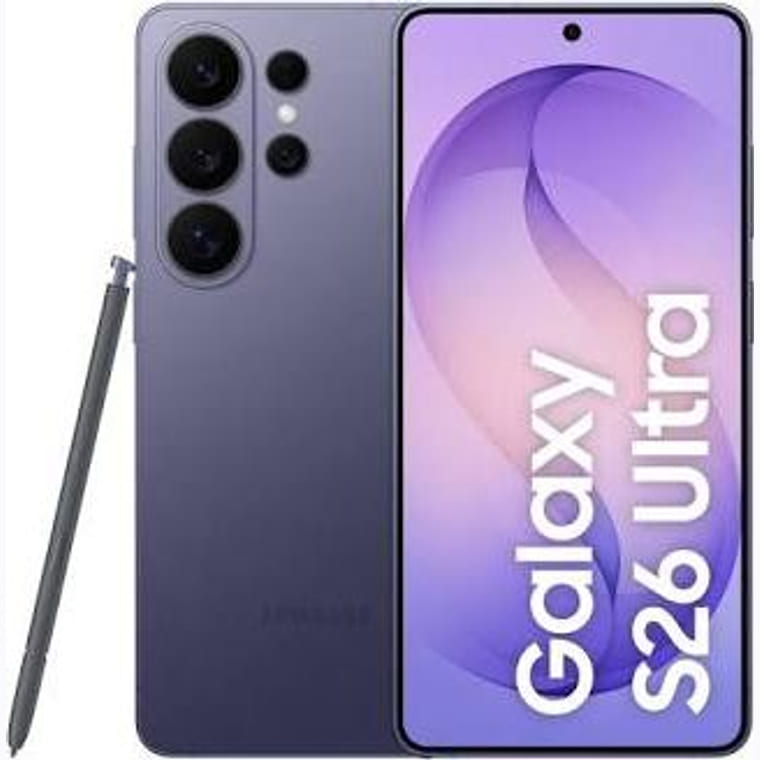
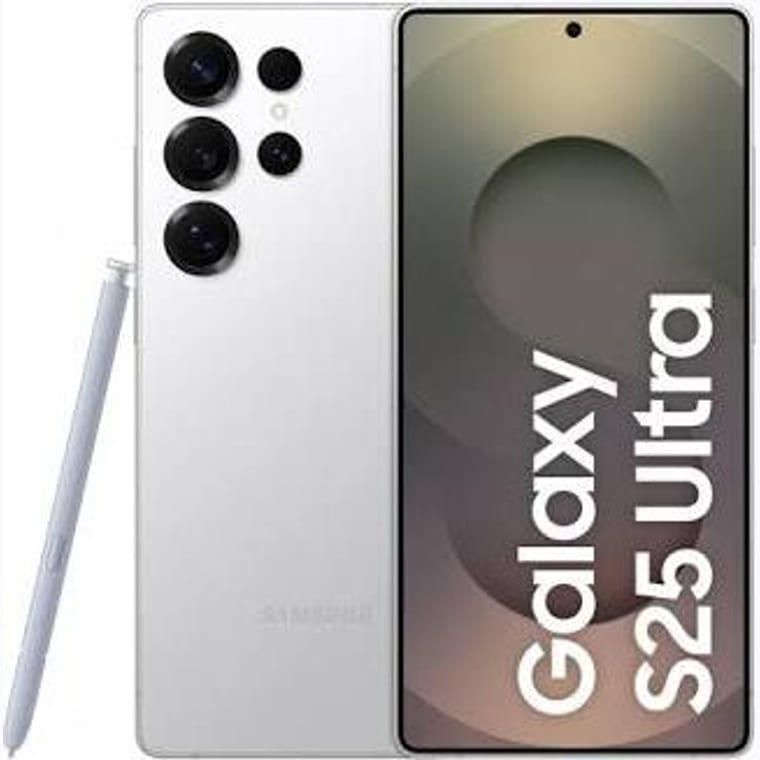
Put Samsung’s own published specifications for these two phones side by side and the list of differences is remarkably short. The Galaxy S26 Ultra weighs 214 g against the S25 Ultra’s 218 g, and it offers a 16 GB memory option where the older phone tops out at 12 GB. On Samsung’s numbers, that is the complete list of confirmed advantages — and there is a ₹15,000 price gap attached to it.
What is genuinely identical
The display matches in every published respect. Both use a 6.9-inch QHD+ Dynamic AMOLED 2X panel at 3120 × 1440, both peak at 2600 nits, and both run an adaptive 1–120Hz refresh rate. There is no resolution bump, no brightness bump, and no change to the refresh range. If the screen is the thing you spend all day looking at, these two phones give you the same one.
Storage tiers are identical too: 256 GB, 512 GB and 1 TB on both. Water resistance is IP68 on both. Both are 5G. Both include the built-in S Pen, which remains the feature that separates an Ultra from the rest of the Galaxy line.
Battery life is where the similarity becomes most striking. Samsung quotes up to 31 hours of video playback for both phones. That is the manufacturer’s own figure, for both devices, unchanged year over year.
And both run Galaxy AI — not a newer tier on the S26, the same platform. It is worth reading the conditions attached to that, which we have reproduced in full at the bottom of this page: availability varies by region, OS version, device model and carrier, a Samsung account may be required, Samsung explicitly does not warrant the accuracy of AI output, and while the basic features are free today, future features may be paid.
The frame change is a trade-off, not an upgrade
This is the difference most worth understanding, because it is easy to read as a straightforward win when it is not. The S25 Ultra uses a titanium frame. The S26 Ultra uses Armor Aluminium.
Aluminium is the lighter of the two materials, which is precisely where those four grams come from. The weight saving and the material change are the same decision viewed from two directions — Samsung did not make the phone lighter and change the frame; it made the phone lighter by changing the frame. Titanium is generally regarded as the more premium and more rigid choice, so if that matters to you, the older phone is the one that has it.
Cover glass shifts in the same direction. The S25 Ultra ships with Corning® Gorilla® Armor 2, the tougher and less reflective option. The S26 Ultra is listed as Armor 2 or Gorilla® Glass Victus® 2 depending on the variant — so Armor 2 is no longer guaranteed, and which one you get depends on which model you buy. Check before ordering if this matters to you.
Memory: who actually needs 16 GB?
The 16 GB option is a real advantage, but a narrow one. On a phone, additional RAM mostly buys you more apps held in memory rather than reloaded, and more headroom for on-device AI models. For heavy multitaskers and anyone running local AI workloads it is worth having. For everyone else, 12 GB on the S25 Ultra is not a constraint you are likely to feel in normal use.
Colours
The S25 Ultra actually offers more choice: four standard Titanium finishes — Whitesilver, Silverblue, Black and Gray — plus three online-exclusive colours, Pinkgold, Jadegreen and Jetblack. Seven in total.
The S26 Ultra offers six: four standard finishes including Cobalt Violet, plus two special colours. A small point, but if a specific finish is what you want, the older phone has the wider range.
Price: ₹15,000 for four grams and a memory option
On Samsung India’s own pricing, the S26 Ultra sells at ₹1,24,999 against an MRP of ₹1,39,999. The S25 Ultra sells at ₹1,09,999 against an MRP of ₹1,29,999. That is a ₹15,000 gap at street prices.
Framed against the confirmed differences, that is a lot of money for a weight saving you will struggle to notice in the hand and a memory tier most buyers will not use. If the unverified chipset and camera changes turn out to be substantial, the calculation shifts. On what Samsung has published so far, it does not.
Who should buy which
Buy the S26 Ultra if you want the lightest Ultra Samsung has made, you specifically want 16 GB of memory, or you want the longest possible remaining window on the seven-year update commitment.
Buy the S25 Ultra if you would rather have the titanium frame and guaranteed Armor 2 glass, you want the wider colour range, or — most likely — you would rather keep the ₹15,000. Both phones carry the same seven-year update guarantee, so buying the older generation does not mean buying into a short support life.
What we have not confirmed
Chipset, the camera system, charging wattage and OS version are not yet verified for the S26 Ultra against Samsung’s published specifications, and this page says so rather than presenting a guess as fact. Those are the fields most likely to change the recommendation above — particularly the cameras, since the S25 Ultra’s 200 MP main sensor and dual telephoto arrangement is already very strong, and a meaningful step up there would justify the price gap in a way that four grams does not.
We will update this comparison and remove the provisional notice once those figures are confirmed.