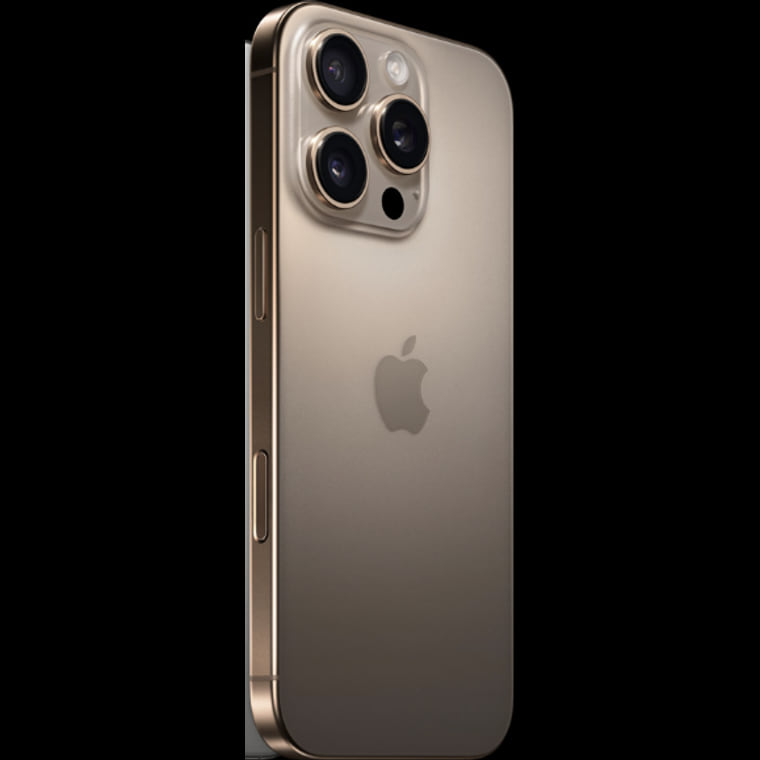
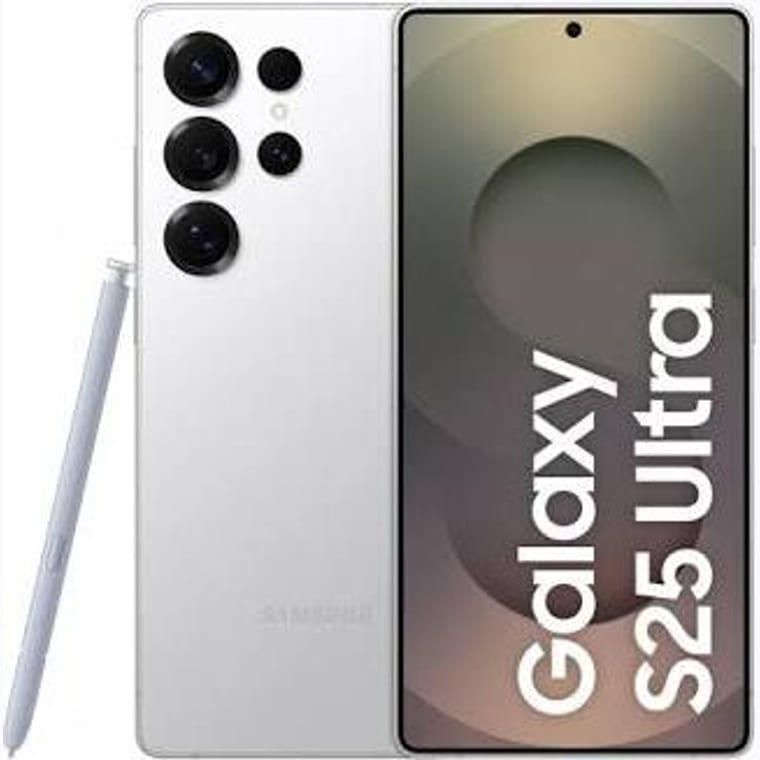
The usual assumption with these two is that you pay more for the iPhone and get the more premium object. On current Indian pricing that is backwards: the iPhone 16 Pro is ₹1,19,900 and the Galaxy S25 Ultra is ₹1,09,999. The Samsung is roughly ₹10,000 cheaper and has more hardware.
Where the Galaxy S25 Ultra is measurably ahead
- Display: 6.9-inch at 3120 × 1440 against 6.3-inch at 2622 × 1206. Bigger and sharper.
- Memory: 12 GB against 8 GB.
- Base storage: 256 GB against 128 GB. At the entry tier that gap alone is worth real money.
- Main camera: 200 MP against 48 MP.
- Telephoto: two of them — 10 MP at 3× and 50 MP at 5× — against a single 12 MP 5×. The 3× is the one you will actually reach for most.
- Battery: 5,000 mAh against 3,582 mAh, quoted at up to 31 hours of video playback.
- Wired charging: 45W against 38W.
- S Pen: built in. The iPhone has no stylus.
Where the iPhone 16 Pro is ahead
Wireless charging: 25W MagSafe against 15W Qi2, and the magnetic accessory ecosystem around MagSafe is genuinely useful — mounts, wallets and battery packs that attach and stay attached.
Satellite SOS: the iPhone 16 Pro can contact emergency services without cellular coverage. The S25 Ultra cannot. If you hike, drive remote routes, or travel off-grid, this is not a spec-sheet nicety — it is the single most consequential difference on this page.
Size: at 6.3 inches the iPhone is substantially more manageable than a 6.9-inch Ultra. Whether that is an advantage depends entirely on your hands and pockets, which is why we have not scored screen size for either phone.
Video and ecosystem. Apple's video pipeline remains the reference point on phones, particularly for stabilisation and consistency across lighting changes. And if you own a Mac, iPad or AirPods, the handoff behaviour is a real daily convenience that no spec row captures.
Cameras: reach versus consistency
The S25 Ultra's advantage is reach and flexibility. Two telephoto lenses mean genuine optical zoom at both 3× and 5×, where the iPhone jumps straight to 5× and crops for anything between. For concerts, sport, wildlife or simply photographing your kids across a room, that middle range matters more than most spec comparisons admit.
The iPhone's advantage is consistency. Colour science holds together across the lenses, video is dependable without fiddling, and results are predictable. Samsung's processing is more aggressive — often more impressive at a glance, occasionally less faithful.
200 MP against 48 MP sounds decisive and mostly is not. Both bin down to sensible output sizes. The lens count is the difference that shows up in real photographs.
The 128 GB problem
Worth isolating, because it changes the price comparison. The iPhone 16 Pro starts at 128 GB; the S25 Ultra starts at 256 GB. If you would upgrade the iPhone to 256 GB — and shooting ProRes video, most people should — the real gap widens well beyond ₹10,000. Compare like tiers before deciding.
The cost of switching is real, and it is not on the spec sheet
If you are already inside one of these ecosystems, the honest comparison is not iPhone against Galaxy — it is the cost of moving. Purchased apps do not transfer. iMessage threads do not follow you to Android, and group chats you leave behind will notice. AirPods work with Android but lose fast pairing and automatic device switching. A Mac paired with an iPhone hands off calls, clipboard and Continuity Camera; paired with a Galaxy it does not.
None of that makes either phone better. It does mean a ₹10,000 hardware advantage can be wiped out by a weekend of migration and a year of small friction. Weigh it honestly before treating this as a pure specification decision.
Longevity
Samsung guarantees 7 years of OS updates on the S25 Ultra. Apple does not publish a guaranteed window, but has historically supported iPhones for five to six years. For most buyers both comfortably outlast the phone's practical life, so this matters mainly if you intend to keep it past the five-year mark or you care about resale to someone who will.
A note on the table above
Several rows read Not recorded for the iPhone 16 Pro. That means we have not yet verified an equivalent figure for that device — it does not mean the feature is missing. We would rather show a gap in our data than publish a number we have not checked.
Who should buy which
Buy the Galaxy S25 Ultra if you want more phone for less money, you use zoom often, you want the S Pen, or you value battery life and base storage. It is the better hardware buy, and it is the cheaper one.
Buy the iPhone 16 Pro if you already own Apple devices, you shoot a lot of video, you want a phone this capable in a smaller body, or you want satellite SOS. That last one is worth the price difference on its own for the right person.