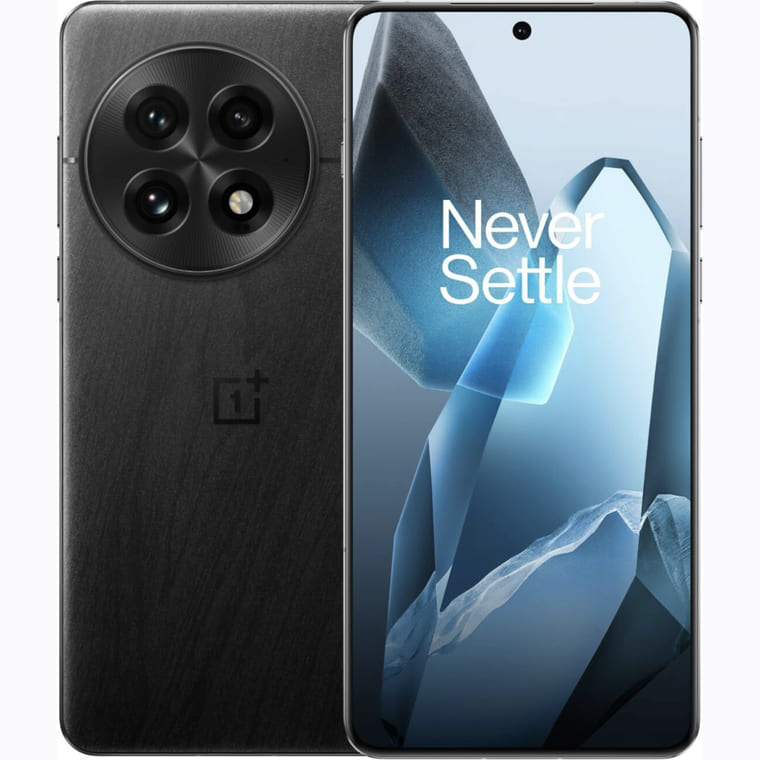
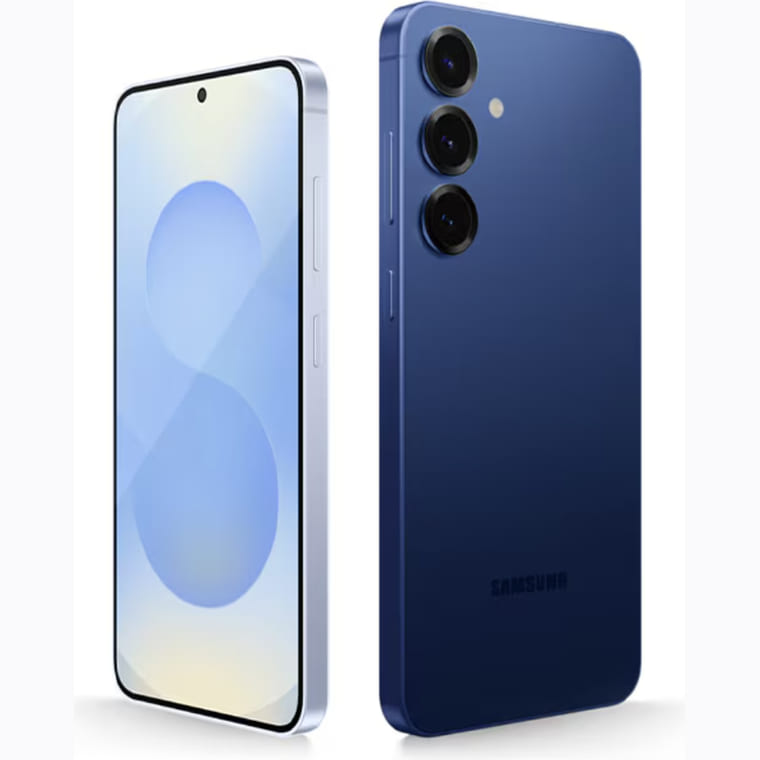
These two are usually shelved together as ₹75,000-ish Android flagships, but they are not really competing for the same buyer. The OnePlus 13 is a 6.82-inch phone with a 6,000 mAh battery. The Galaxy S25 is a 6.2-inch phone with 4,000 mAh. Almost every difference below follows from that one decision.
On raw hardware, the OnePlus wins nearly everything — and costs less
This is unusual enough to state plainly. At ₹74,990 against ₹79,999, the OnePlus 13 is the cheaper phone, and it also has the better numbers almost across the board:
- Display: 3168 × 1440 against 2340 × 1080. That is a genuine QHD-versus-FHD gap, not a rounding difference.
- Battery: 6,000 mAh against 4,000 mAh — 50% more capacity.
- Charging: 100W wired against 25W. Four times faster, and the practical difference between a top-up over coffee and a top-up over lunch.
- Wireless: 50W against 15W.
- Ultra-wide: 50 MP against 12 MP.
- Telephoto: 64 MP against 10 MP, both 3× optical.
- Memory: a 16 GB option; the S25 stops at 12 GB.
Both run a Snapdragon 8 Elite — Samsung's is the binned "for Galaxy" variant — so sustained performance is close enough that you will not notice in daily use.
So why would anyone buy the Galaxy S25?
Three reasons, and they are better reasons than the spec sheet suggests.
It is small. The compact flagship is close to extinct. If you want a phone that works one-handed and disappears in a pocket, the S25 is one of very few current options with no meaningful compromise in performance. The OnePlus 13 is a two-handed phone. No spec row captures this, which is exactly why we have not marked screen size as a win for either.
Software support is nearly double. Samsung guarantees 7 years of OS updates. OnePlus offers 4 years of OS plus 6 years of security patches. If you keep phones for five or six years, the S25 is still receiving full Android versions when the OnePlus has stopped. That also props up resale value.
The AI feature set is deeper. Galaxy AI on the S25 includes Circle to Search, Live Translate for calls, Generative Edit for photos, Note Assist and Chat Assist, with Gemini Nano running on-device. OxygenOS has its own AI tools, but Samsung's integration with Google is currently tighter and broader.
Cameras: more megapixels versus more processing
On paper the OnePlus 13 has the stronger camera hardware — a 50 MP ultra-wide against 12 MP, and a 64 MP telephoto against 10 MP. Both reach 3× optical.
Sensor size and pixel count are not the whole story, though. Samsung's computational photography is more mature, and the S25 adds AI Zoom that reconstructs detail up to 30×, plus Generative Edit for adding and removing objects. In good light the OnePlus's extra resolution shows, particularly on ultra-wide shots. In mixed light and at high zoom the gap narrows.
The things that are close
Both are IP68. Both have adaptive 1–120Hz LTPO displays. Both ship on Android 15. Both give you 256 GB and 512 GB storage tiers. Neither has a headphone jack or expandable storage.
Software: OxygenOS against One UI
Both ship on Android 15, and the difference is temperament rather than capability. OxygenOS 15 is the lighter of the two — fewer preinstalled apps, less duplication of Google's own services, and animations that feel quicker even where the underlying speed is identical.
One UI 7 is heavier and more opinionated, and it carries Samsung's own versions of apps Google already provides. In exchange you get a far deeper feature set: better window management for multitasking, DeX for a desktop-style workspace on an external display, and the tightest Google AI integration currently shipping on Android. Some users find the extra layers cluttered; others rely on features OxygenOS simply does not have.
A note on the table above
Several rows read Not recorded for the OnePlus 13. That means we have not verified Samsung-equivalent figures for that device yet — it does not mean the phone lacks the feature. The OnePlus 13 is IP-rated, has a front camera, and has its own AI toolset. We would rather show a gap in our data than publish a number we have not checked, and those rows will fill in as we confirm them.
Who should buy which
Buy the OnePlus 13 if you want the most hardware for the money, you charge in short bursts and value 100W, you watch a lot of video on your phone, or you simply prefer a large screen. It is the better value on every measurable axis.
Buy the Galaxy S25 if you want a phone you can use one-handed, you plan to keep it five years or more, or you want the broader Galaxy AI toolset. You are paying ₹5,000 more for a smaller phone with weaker hardware — and for some people that is exactly the right trade.