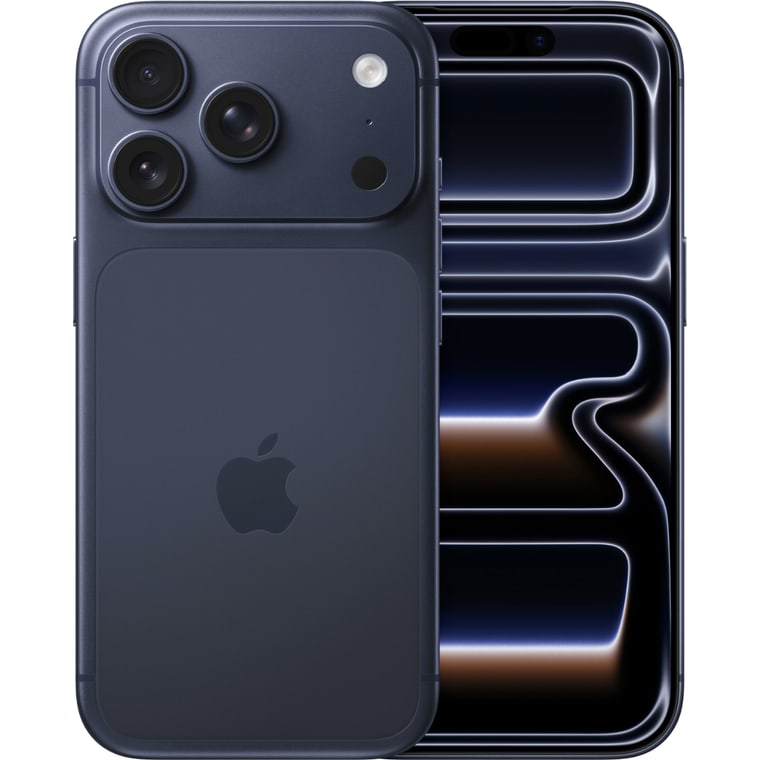
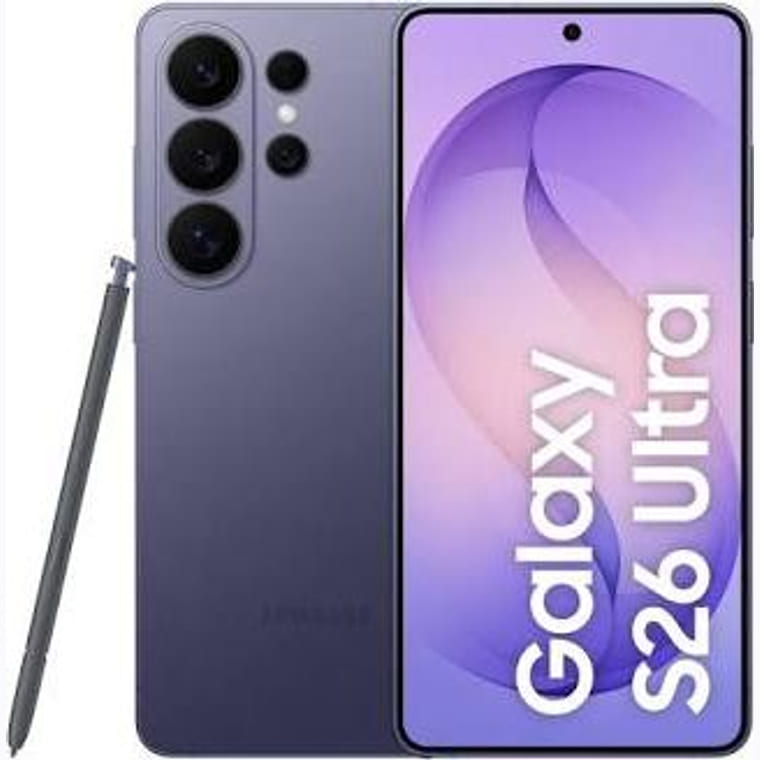
These two sit within about ₹5,000 of each other — ₹1,29,900 for the iPhone 17 Pro against ₹1,24,999 for the Galaxy S26 Ultra at 256 GB — and they disagree about almost everything. Unusually for a flagship comparison, the cheaper phone wins most of the measurable rows.
Every figure below comes from Apple India and Samsung India directly. Where a manufacturer does not publish something, we say so rather than filling it in.
Screen: the Ultra wins on every axis except size preference
The Ultra runs a 6.9-inch QHD+ panel at 3120 × 1440. The iPhone is 6.3 inches at 2622 × 1206. That is not a close comparison on paper — the Ultra has substantially more screen and meaningfully more resolution.
Brightness needs care, because the two are quoted differently. Apple gives 3000 nits peak outdoor, 1600 nits for HDR content and 1000 nits typical. Samsung gives 2600 nits. Apple's headline number is higher but describes a peak outdoor mode; Samsung's is the figure it quotes flatly. For HDR video specifically, the Ultra's 2600 is comfortably ahead of the iPhone's 1600.
Both run adaptive 1–120Hz. If you want a smaller phone, the iPhone is the only option here — that is a real preference, not a deficiency.
Cameras: reach against resolution
This is the most interesting disagreement on the page, and neither approach is obviously right.
Samsung goes wide and dense. A 200 MP f/1.4 main — the widest aperture of any phone here — plus a 50 MP ultra-wide, a 10 MP 3× telephoto and a 50 MP 5× periscope. Four rear cameras, optical zoom at both 3× and 5×, optical-quality modes at 2× and 10×, and digital reach to 100×.
Apple goes uniform and long. Three 48 MP Fusion sensors, so every focal length is full-resolution rather than the main sensor doing the work while a 10 MP lens handles zoom. The telephoto is a 100 mm tetraprism at 4× optical, extending to 8× optical-quality at 200 mm.
So Samsung reaches 5× optically and 100× digitally; Apple reaches 8× at optical quality and stops at 40×. Apple's 8× is likely more usable than Samsung's 10× optical-quality mode because it comes off a 48 MP sensor rather than a crop — but Samsung's dedicated 5× periscope is real glass where Apple's 8× is a crop of the 4×.
Where we will not pretend to certainty: which produces better photographs. That is processing, not specification, and it needs both phones in hand.
Battery and charging: not close
5000 mAh against 3988 mAh, and 60W wired against Apple's 50%-in-20-minutes with a 40W or higher adapter. The Ultra has the larger cell and charges faster from the wall.
Both quote up to 31 hours of video playback, which is the fairest like-for-like figure available and suggests iOS efficiency closes much of the capacity gap in practice. Apple takes wireless: 25W MagSafe or Qi2 against 15W.
Water resistance, and a number worth noticing
Both are IP68, and IP68 is not one rating. Apple specifies a maximum depth of 6 metres for up to 30 minutes. Samsung specifies 1.5 metres. That is a fourfold difference behind an identical-looking badge.
For everyday spills and rain it changes nothing. If you swim with your phone or work near water, it is one of the clearest practical differences on this page — and exactly the kind of thing a specification table normally flattens.
The S Pen, and what has no equivalent
The Ultra has a stylus built into the body. The iPhone has no stylus support of any kind. If you annotate, sketch, sign documents or take handwritten notes, this is decisive and no amount of camera specification offsets it.
In the other direction, ProRes is decisive for video work. No Android flagship offers it, and if you edit professionally that single row may settle the choice regardless of everything else.
Silicon, and where the honest gaps are
Apple confirms an A19 Pro. Samsung does not name the Ultra's chip but publishes an octa-core 4.74 / 3.6 GHz layout, which matches the Snapdragon 8 Elite Gen 5.
Worth knowing, because it is easy to assume otherwise: the Ultra is Snapdragon in India, while the base Galaxy S26 ships the Exynos 2600 here. Buying up the Ultra changes the silicon, not just the screen size.
Two gaps we are not filling. Apple publishes no RAM figure and no fixed OS-update term — the Ultra's seven-year guarantee has no stated Apple equivalent, even though iPhones have historically been supported at least that long. Samsung does not publish the Ultra's GPU.
Who should buy which
The Galaxy S26 Ultra is the better value and the better phone on most measurable rows: bigger and sharper screen, brighter for HDR, larger battery, faster wired charging, more versatile cameras, an S Pen, and ₹5,000 cheaper.
Choose the iPhone 17 Pro for specific, legitimate reasons rather than general ones: you shoot video professionally and need ProRes; you want the longest usable zoom; you want a smaller phone; you need IP68 at six metres; or you are already in the Apple ecosystem, where switching costs you working features rather than convenience.
That last case is the most common and the least visible on a specification sheet. It is also entirely valid — it is just not an argument this table can make for you.